Certain men are born with big, self-sufficient personalities. They are wired to win and to lead, not merely to participate. Some apply these qualities in competitive athletics, politics, business pursuits, scientific discovery, or the military. They are larger-than-life men like Joshua who was told by God: “No man shall be able to stand before you all the days of your life; as I was with Moses, so I will be with you. I will not leave you nor forsake you. Be strong and of good courage…” Joshua 1:5
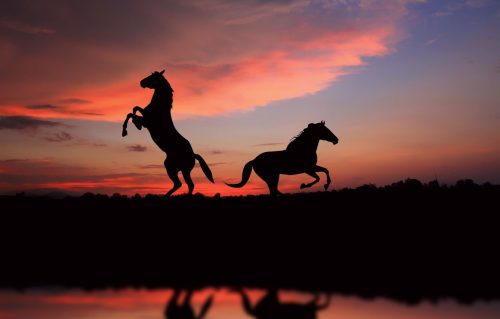
In biblical terms, such men are not sheep, but horses. They are designed to understand and use power. Unfortunately, they often use the personality gifts they’re given in a corrupt, selfish manner. First, let’s read how the Lord describes the animal which He designed:
“Have you given the horse strength? Have you clothed his neck with thunder? Can you frighten him like a locust? His majestic snorting strikes terror. He paws in the valley, and rejoices in his strength; He gallops into the clash of arms. He mocks at fear, and is not frightened; Nor does he turn back from the sword. The quiver rattles against him, the glittering spear and javelin. He devours the distance with fierceness and rage; nor does he come to a halt because the trumpet has sounded. At the blast of the trumpet he says, ‘Aha!’ He smells the battle from afar, the thunder of captains and shouting.”
Job 39:19-25
A wild stallion is not very useful to anyone, but such animals are incredibly valuable when “broken” and submitted to their rider.
Similarly, when this strength and resolve is applied by men in an undisciplined or spiritually unsanctified manner, it manifests as greed, arrogance, lust, and the pursuit of power. The Lord truly despises such self-directed autonomy (“My will be done”); the Bible calls this “iniquity.” Unchecked self-indulgence very often leads to broken marriages, failed businesses, prison, or an early grave. The Bible advises: “A horse is a vain hope for safety; neither shall it deliver any by its great strength.” Psalms 33:17
The prophet Isaiah warns against self-reliance, encouraging us instead to lean on the Lord: “Woe to those who go down to Egypt for help, And rely on horses, Who trust in chariots because they are many, And in horsemen because they are very strong, But who do not look to the Holy One of Israel, Nor seek the LORD!” Isaiah 31:1
Let’s not be fascinated or disappointed by the strong individuals who pervert this gifting. We need to guard our hearts from fretting over the tragedy and brokenness of those who engage in a self-centered, hedonistic lifestyle. We aregathered here, in this online community, to use spiritual diagnostics to examine matters through a Biblical worldview. Barna Research says less than 10% of Christians actually make decisions in such a manner, but it’s really the only framework that works long-term. Too much pain and aggravation accompanies the alternative, humanistic worldview. Been there, done that. No prizes.
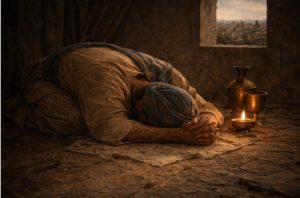
So, what do we do when the “horses” come to us in a spirit of brokenness, seeking our advice? Please know that they often feel spiritually marginalized and purposeless in a typical church environment. Humble Pastors are, at times, intimidated by the powerful demeanor of these alpha males. Ironically, these same passionate, self-reliant men are inspired by those with spiritual maturity, and they truly yearn to understand how to rely on God more fully. They honestly want to switch their source of strength from willpower to Holy Spirit power. The Apostle Paul, the original New Testament “horse,” and the prototype of willful, self-righteous spiritual leadership, suffered from these same personality challenges even decades after his conversion. He wrote:
“For what I am doing, I do not understand. For what I will to do, that I do not practice; but what I hate, that I do…”
Romans 7:15
Given the passages quoted above from Deuteronomy, Psalms, Isaiah, and Romans, it appears that God Himself acknowledges the personality differences among His people. The strong “horses” seem to easily operate in parts of the unholy world. They’re not intimidated by the pressure to perform; they’ve mastered that ability. However, maintaining elevated, spiritual standards when dealing with the world can challenge the most dedicated Christian leader.
Furthermore, knowing how to differentiate wise, defensible solutions from frivolous, self-protective ones is no easy task. Again, these “horses” yearn for clear, practical, spiritually grounded decision-making algorithms. Like Paul, they are exhausted and ready to yield to the influence of the Holy Spirit. They want to draw on the endless fuel supply of grace rather than intellect or self-will. When discipled properly and shown the merits of following Biblical principles, they eventually make natural ambassadors from God’s Kingdom.
Let’s bolster the courage of such “horses” and provide them with hope. Consider bringing them into our Spiritual Strategies Institute community and, perhaps, you might become as a discipler to them as well.